General care
- How often? It depends on species, use and exposure. Outdoor decking usually needs an annual inspection and clean, with re-oiling every 1–2 years. Indoor timber needs less: periodic cleaning and humidity control. Marine and other high-exposure sites may need attention twice a year.
- Treated vs untreated. Treated timber (H3–H6) has chemical protection but still benefits from cleaning and sealing. Species the poster recommends for oil finishes, such as Merbau, Red Ironbark and Tallowwood, rely on their own oils and density, but periodic oiling keeps their appearance and weather resistance. Check our recommended treatment by species before leaving any timber untreated outdoors.
- Don't over-maintain. Harsh chemicals, over-oiling and pressure washing can damage the surface, strip natural oils and shorten the timber's life.
Outdoor timber
Cleaning decking
Sweep regularly. For a deeper clean, use a pH-neutral timber cleaner and a soft brush, working with the grain, then rinse with low-pressure water. Avoid pressure washers above 500 PSI, which damage the fibres and cause splintering.
When to re-oil
Re-oil when water no longer beads on the surface, typically every 12–24 months. Clean first, let the timber dry completely (48 hours or more), then apply thin coats, ideally in mild weather (15–25°C) with low humidity.
Why timber greys
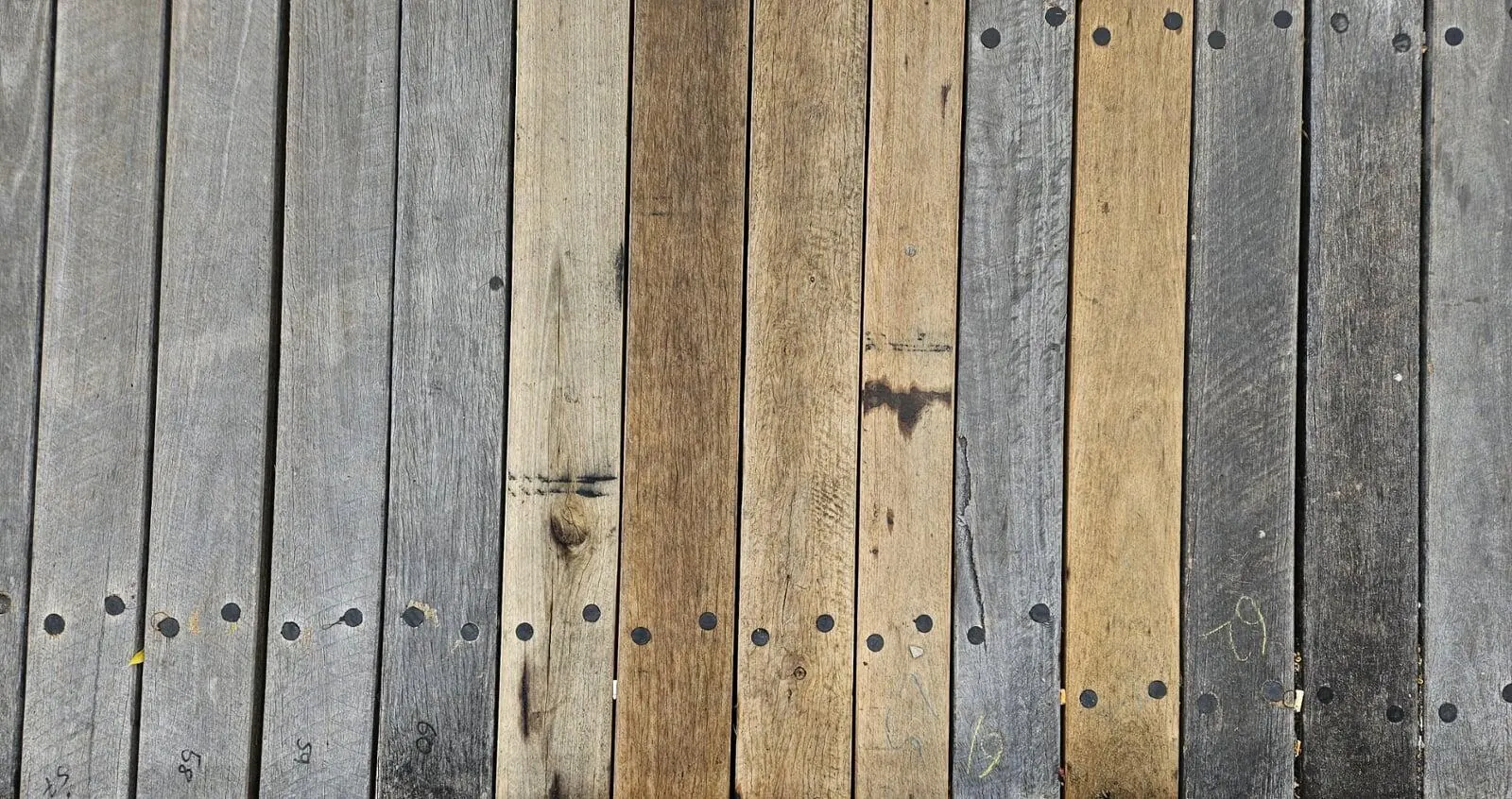
UV light breaks down lignin, the natural glue between wood fibres, so exposed timber silvers over time. It is cosmetic only and doesn't affect strength. Regular oiling slows it, or you can let it weather.
Protecting against the weather
Choose the right finish for the species and use, make sure water drains away, keep air moving under decks, trim back vegetation, and inspect fixings and structure every year.
Mould and mildew
Use a timber mould cleaner or oxygen bleach (not chlorine bleach) mixed with water. Leave for 15 minutes, scrub gently, rinse well and let dry before re-oiling. Fix the underlying moisture problem so it doesn't return.
Indoor timber
- Cleaning floors: sweep or vacuum to remove grit, then damp mop (not wet) with a pH-neutral floor cleaner. Wipe spills immediately and put felt pads under furniture.
- Humidity: keep relative humidity at 40–60% year-round. Low humidity causes shrinkage and cracking; high humidity causes swelling and cupping.
- Refinishing: oiled floors need re-oiling every 1–3 years when they look dry or dull. Polyurethane floors may need a screen and recoat every 3–5 years, and a full sand and refinish every 10–15 years depending on traffic.
- Scratches: buff minor scratches with fine steel wool and re-oil. Sand deeper scratches locally, feather the edges and refinish. Deep gouges may need a professional repair.
Species-specific care
Merbau
Oil regularly to keep its reddish-brown colour and limit surface checking: clean and re-oil every year for the first 2–3 years, then every 1–2 years once it has stabilised. New Merbau leaches tannins at first. This is normal and stops as it weathers.
Spotted Gum
Naturally oily and dense, so it needs little maintenance. For decking, clean every year and apply hardwood decking oil every 1–2 years. It is Class 2 durable on our poster, which recommends H3 CCA treatment for external use and H4 for ground contact.
Cypress Pine
A naturally durable, termite-resistant softwood that needs minimal maintenance. Our poster recommends oil finishes, stains or sealers. Clean every year and re-coat every 2–3 years.
Blackbutt
Low maintenance. Clean regularly and choose the finish for the use: oil outdoors, polyurethane for indoor floors. Re-oil outdoor Blackbutt every 12–18 months to keep its appearance. For external use, our poster recommends CCA or LOSP treatment.
Treated timber (H3–H6)
Treatment protects against decay and insects, but the surface still needs care. Clean every year, check for damage, apply a water-repellent finish, and re-treat cut ends or damaged areas with a suitable CCA or copper azole solution.
Application-specific care
- Jetties and boardwalks: inspect quarterly for marine borer damage, loose fixings and structural integrity. Remove marine growth promptly. Clean freshwater structures every year; rinse saltwater structures regularly, because salt build-up speeds corrosion of fixings. Replace damaged boards immediately.
- Outdoor furniture and structures: clean twice a year, re-oil every year, and check fixings and connections annually.
- Fencing: inspect every year for rot, especially at ground level. Clean and re-oil or stain every 2–3 years, keep drainage good around posts, trim vegetation, and replace damaged palings or posts promptly. See our fence posts.
- Cladding: clean and re-oil oiled cladding every 2–3 years; re-stain stained cladding every 3–5 years; leave unfinished cladding to weather or clean it yearly to slow greying. Check for moisture behind the cladding around windows and doors.
Products and treatments
- Cleaning: pH-neutral timber cleaners or oxygen bleach solutions. Avoid generic cleaners, chlorine bleach and harsh chemicals that strip natural oils.
- Finishing: penetrating hardwood oils outdoors; polyurethane or hard wax oils indoors.
- Oil vs stain vs sealer: oil penetrates, enriches colour and repels water but needs regular reapplication. Stain adds colour and UV protection while showing the grain, and lasts 2–5 years. Sealer forms a surface film; it lasts longer but can peel if moisture gets underneath.
- Matching the species: dense, oily species such as Merbau and Spotted Gum need oils made for high-density hardwoods. Always test on a hidden area first.
We supply penetrating oils, deck cleaners, tannin inhibitors, stains and end-grain sealers through Durable Hardware timber oils and finishes.
Problem solving
- Checking or cracking: minor surface checking is normal in dense hardwoods exposed to weather, and cosmetic. Deep cracks can mean a moisture problem. Keeping timber oiled reduces checking.
- Water no longer beads: the finish has worn away. Clean and re-oil promptly.
- Cupping or warping: caused by uneven moisture, often a deck absorbing more moisture underneath than on top. Improve airflow and installation details.
- Tannin stains: common with new Merbau and some eucalypts. Clean with an oxalic acid-based timber cleaner and rinse well. It usually resolves after the first year.
- Insect damage: identify the pest first. Termites need professional treatment immediately. Naturally durable species such as Spotted Gum and Cypress Pine have natural resistance; damage to treated timber may mean the treatment has failed. See termite and ant resistance.
- Repair or replace? Replace if structural integrity is compromised, damage affects more than 30% of a member, or repeated repairs haven't worked. Repair if the damage is local, cosmetic or non-structural.
Our maintenance and inspection service
Call in a professional for structural damage, large refinishing jobs, suspected termites, moisture problems in structural timber or engineered timber repairs. We offer assessment and maintenance planning, cleaning, re-oiling and refinishing, inspection and condition reports, and repair and restoration using matching species and grades. See maintenance and inspection.